

Efficient system of criminal justice for sustainable economic development (27.09.2018)
The event was opened by the rector of the University Vasyl Tatsiy: “For the second year in a row lawyers from Ukraine and foreign countries attend this scientific and practical event to discuss the most pressing legal issues. Nowadays Ukraine features intensive searches of ways of European integration to create a reliable system of national security and defense as well as effective counteraction of crime. It is the implementation of the latest developments in legal science, close cooperation of theorists and practitioners, openness to the international community that enable an in-depth analysis of the existing problems that will contribute to the further development of the theory of law and practice of its application.”
Bohdan Holovkin, the moderator of the panel, drew attention of the participants to the fact that the main areas of work include the following problems: the role of criminal justice bodies in the implementation of the anti-corruption reform and sustainable economic development; anti-corruption compliance: opportunities and prospects; crime in the economy: modern trends and innovative methods of counteraction.
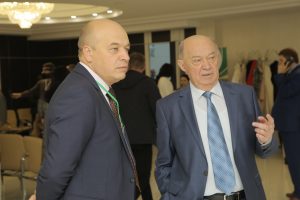


Key discussion speakers:
Kęstutis Lančinskas, Head of EU Advisory Mission Ukraine, spoke on interagency and international cooperation, accountability and independence as key to an efficient and trustworthy criminal justice system. The report identified the main problems and challenges faced by Ukraine towards establishing a proper criminal justice system based on the rule of law. The speaker made recommendations that would accelerate the reform of the criminal justice system: active tracking of cash flows in the course of the investigation; conducting trainings on counteraction to money laundering and financial investigations; specialization of prosecutors and law enforcement officers; close cooperation between the police and the prosecutor’s office.
Anton Yanchuk, Head of the National Agency of Ukraine for Finding, Tracing and Management of Assets Derived from Corruption and Other Crimes, reported on ensuring the interests of the state and promoting business development. He revealed the main goal and tasks of the newly created body, identified the peculiarities of arrested property management, and also provided instructions on the arrested property management, in particular the need for a systematic presentation of legal norms in Ukraine and foreign jurisdictions in the field of property management.
Yurii Kravchenko, Director of Kharkiv Territorial Department of the National Anti-Corruption Bureau of Ukraine, presented the report “Fighting Top Corruption in Ukraine: Why Compromises are Impossible”. In his report Mr Kravchenko defined the specifics of the activity of National Anti-Corruption Bureau of Ukraine and the results of its work since its establishment. He emphasized the problematic character of bringing lawsuits and trying such cases in courts of first instance.
Oksana Kryzhanivska, Senior Partner at “Alexandrov&Partners” Law Firm, highlighted the topic: “Protection of International Investments from Corruption in Ukraine”. The speaker stressed the urgent issues of directing foreign investments to the territory of Ukraine, which included corruption. Foreign investors do not want to build up their business in a country with a high level of corruption perception. And those businessmen who plan to enter the Ukrainian market want to be sure that their assets and investments will be protected. Ms. Kryzhanivska also disclosed the mechanism of protecting foreign investments against corruption in Ukraine.
Kostiantyn Bryl, Head of Zaporizhzhya Regional State Administration, and Yaroslav Hryshyn, Deputy of Zaporizhzhia Regional Council, spoke about experience of positive counteraction to raiding in Ukraine (based on Zaporizhzhia Oblast case). The report identified peculiarities of raiding in Ukraine, outlined the reasons for the existence of this activity and its stages. The speakers also analyzed experience of positive counteraction to raiding on the territory of Zaporizhzhya Region.
Elena Konceviciute, Senior Anti-Corruption Adviser of the EU Anti-Corruption Initiative (EUACI) in Ukraine in her report “Lithuania Case Study: Can International Organizations Help to Fight Corruption?” described Lithuania’s experience in combating corruption and the role of international organizations in this process. She emphasized that simple introduction of international anti-corruption recommendations is not enough and that their effective implementation is required. She also identified recommendations for Ukraine on the way to overcoming corruption.


Vasyl Shakun, Professor of the National Academy of Internal Affairs, Member of the National Academy of Legal Sciences of Ukraine, reported on: “Reform of Criminal Justice in the Criminological Dimension”. The report stresses the need to reform the criminal justice system, taking into account the scientific developments in criminological science.
Oleksandr Okuniev, Chairman of the Board at the Professional Association of Corporate Management, presented the report “The Implementation of Anti-Corruption Compliance Models as a Business Contribution to the Fight against Corruption”. He revealed the following issues: corruption in Ukraine and in the world; definition of compliance, anti-corruption compliance; motives for introducing anti-corruption programs by business; who and how can help companies implement anti-corruption compliance procedures.
Daniele Tumietto, expert of the United Nations Economic Commission for Europe (Italy), delivered a speech on how transnational tax compliance can be a factor in the development of legality within the country. The speaker introduced the participants to the discussion on the experience of implementing tax compliance in Italy, identified common and distinctive features of the transnational and Italian tax compliance, and highlighted the challenges and mistakes most countries encountered during the introduction of this system.
Rainer-Elk Anders, PhD (Bath Spa University, UK), in his report “International Experience in the Fight against Corruption in the Private Sector: Strategies for Small and Medium Enterprises in Ukraine” revealed international experience in combating corruption in the private sector. He outlined the problems and means of their solution, determined the strategies for small and medium enterprises in Ukraine.
Michał Jabłoński, Senior Associate at Dentons (Warsaw office), Lecturer at Warsaw University (Poland), presented the report “State’s Liability in Damages as a Key Condition for Building Mutual Trust between State and Business in View of a Judicial Practice”. The speaker highlighted the main stages and problems faced by the state in developing mutual trust with business, identified international and European recommendations that would facilitate the process, and described the experience of Poland, namely: problems, disadvantages and judicial practice.
Mykola Khavroniuk, Director of Scientific Development and Member of the Board of the Center for Political and Legal Reforms, reported on the issue: “Crimes in the Field of Economic Activity: Do We Need This Section in the Criminal Code of Ukraine?” The speaker justifies the position regarding the inappropriateness of the section “Crimes in the Field of Economic Activity” in the Criminal Code of Ukraine. He also notes that separate articles of this section should be canceled, others should be transferred to other sections of the Special Part of the Criminal Code of Ukraine and the rest should not be defined as crimes in the sphere of economic activity, but as crimes against the financial and monetary system of the state etc.
Hans-Heiner Kühne, Professor of Criminal Law, European and International Criminal Law, Criminal Procedure Law, and Criminology at the University of Trier (Germany), reported on “Economic and Institutional Justice as Prerequisites for Successful Anti-Corruption Strategies” He uncovered the main elements of a successful anti-corruption strategy, including economic and institutional justice which play the key role, as well as made recommendations on reforming the criminal justice system in Ukraine.
Oleksandr Okolit, Deputy Head of the Department of Protection Economics of the National Police of Ukraine, spoke on crimes on the virtual stock market. The speaker characterized the volumes of the Ukrainian stock market over the past five years and described mechanisms of committing crimes on the virtual stock market, in particular, schemes for tax evasion in the course of construction and sale of real estate.
Fabian Teichmann, Attorney, Founder and Head of the Law Firm “Teichmann International” (Switzerland), focused on methods for legalizing money laundering and terrorism financing. He described the ways in which criminals circumvent schemes aimed to counteract the legalization of illegally gained money. Based on the empirical study of Dr. Taichmann, effective methods for legalizing illegally gained money were developed. Identifying and researching these mechanisms will provide the opportunity to develop modern means of counteracting these processes.
Halyna Kokhan, Expert of the EU Anti‐Corruption Initiative in Ukraine, highlighted the topic “Launch of the High Anti-Corruption Court with Assistance of International Organizations”. The report outlined directions for assistance of the European Union in the process of launching the High Anti-Corruption Court. The speaker concluded that there is a need to ensure effective, transparent and efficient functioning of all units: criminal investigations, support for prosecution in court, and exercise of independent justice.
Ihor Voronov, Attorney at “Saienko Kharenko” Law Firm in his report “Providing Cyber Security in the Framework of European Integration” defined the principles of ensuring cyber security, outlined legal and organizational foundations for ensuring the protection of vital interests of man and citizen, society and state, national interests of Ukraine in cyberspace, powers and obligations of state bodies and also focused on the main objects of cyber protection, which create the critical infrastructure of the country.
The report delivered by Dmytro Uzlov, Head of the Department of Information and Analytical Support of the Main Directorate of the National Police in Kharkiv Region, was dedicated to the practical aspects of using the method of RICAS criminal analysis in crime prevention. The speaker analyzed the concept of “criminal analysis”, defined its features, types, elements and sources. The main qualification requirements as well as the main functional responsibilities of the analyst work were also named. All proposed theories are verified for validity. This approach guides for gathering information on the most important parameters, saves time and money, improves mutual understanding and coordination among employees.
Nataliia Hutorova, Professor of Poltava Law Institute of Yaroslav Mudryi National Law University, Member of the National Academy of Legal Sciences of Ukraine addressed the topic “Relations in the Field of Pharmaceutical Activity as an Object of Criminal Law Protection”. The speaker identified the fields of pharmaceutical activity subject to criminal law protection, enumerated the shortcomings of the Law on Criminal Liability in the field of protecting the investigated social relations, as well as proposed ways to increase the effectiveness of criminal law protection.
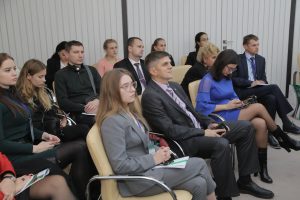


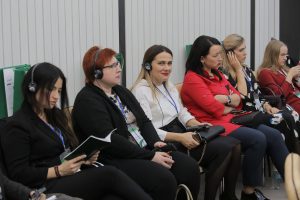

Valerii Shepitko, Head of Department of Criminalistics of Yaroslav Mudryi National Law University, Member of the National Academy of Legal Sciences of Ukraine, reported on problems of using criminalistics knowledge in modern conditions of counteraction to crimes in the field of economy. The speech disclosed the acute issues of investigating economic crimes. It was noted that an important problem during the investigation of crimes in the economic sphere is the involvement of qualified individuals – subjects with special knowledge. The speaker stressed that the development and application of certain forensic methods are related to the automation and algorithmization of investigative activities, the formation of relevant databases.
Yurii Ponomarenko, Associate Professor of the Department of Criminal Law No. 1 of Yaroslav Mudryi National Law University, delivered a speech: “Criminally Legal Tools for Combating Crime in the Economy”. He disclosed the concept of economic crime and the composition of the crimes included into this group. The speaker stressed the feasibility of applying the following criminally legal tools in the investigation of economic crime: criminalization, penalization, de-penalization and “post-criminal decriminalization”.
Conclusion: The third panel discussion was attended by 22 speakers and over 120 participants, including practitioners, lawyers, researchers and students. Speakers represented 9 countries, in particular: Lithuania, Great Britain, Belarus, Switzerland, Germany, Italy, Poland, the United States of America, Ukraine.

